23 November 2026 · info.fixtechsolution@gmail.com
QR Code Payment Scams: How to Stay Safe
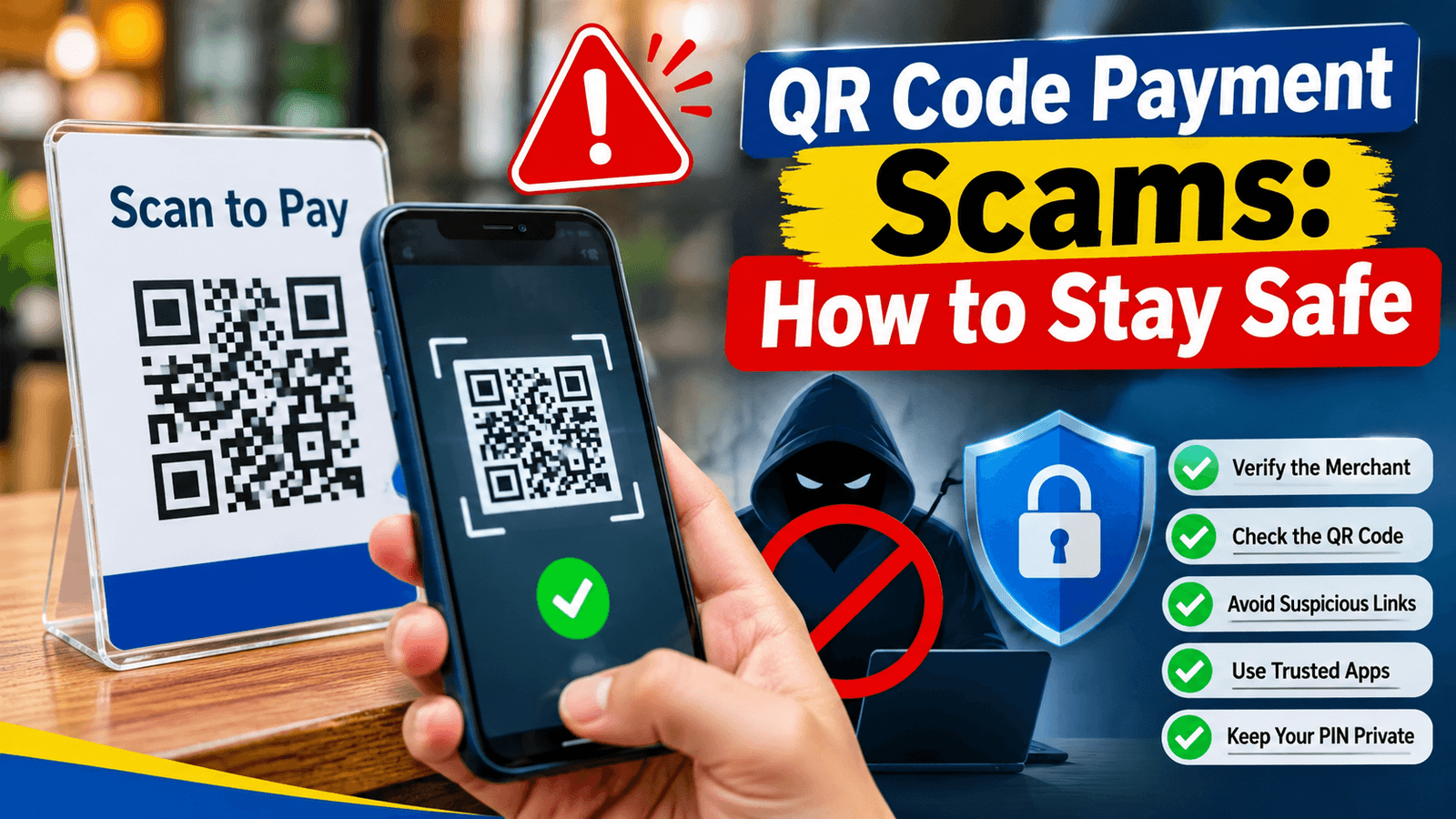
Scanning a QR code feels quick and harmless, and that is exactly why scammers like it. A sticker, a message or a “refund” link can turn a simple scan into a lost payment. Knowing how QR Code Payment Scams work is the first step to avoiding them. This guide explains the common tricks behind QR Code Payment Scams, how to stay safe and how 7Pay fits into a safer payment routine.
What Are QR Code Payment Scams and How Do They Work?
A QR code is just a picture that holds data, and a scammer can swap that data for their own.
In QR code payment fraud, the criminal changes where your money or login details go. They may paste a fake code over a real one, send a code by message or trick you into scanning one to “receive” money. The scan and pay security of the app is only as safe as the code you choose to scan. That is why QR Code Payment Scams are growing alongside mobile payment fraud in general.
Why QR Code Scams in Pakistan Are Growing
More people now pay by phone, and criminals follow the money.
As digital wallets, mobile banking and online payment scams grow together, QR codes have become a favourite tool because they are cheap to produce and hard to read by eye. Shops, parking spots, markets and delivery riders all use them, so a fake one can hide in plain sight. Financial fraud awareness is still catching up, which makes QR code scams in Pakistan a real risk for everyday users and small businesses.
Common Types of QR Code Payment Scams
Most scams fall into a few familiar patterns.
- Sticker swap: a fake QR code is pasted over a real merchant code, so payments go to the scammer.
- Fake payment links: a QR code or message sends you to a copycat page that steals card or login details.
- “Receive money” trick: the scammer says you must scan a code and enter your PIN to receive a payment, but scanning and entering a PIN sends money out.
- Fake refund or prize offers: a code promises a refund, reward or discount to lure you into a payment.
- QR code phishing attacks: a code in an email, text or social media post leads to a page that asks for your banking information.
- Fake delivery or parking codes: a code placed on a package, poster or meter takes you to a fraudulent payment page.
These fraudulent payment QR codes all rely on the same weakness, which is that most people scan first and think later. Knowing the patterns makes QR Code Payment Scams easier to recognize.
Scam Types at a Glance: Warning Signs and Fixes
This table shows how each trick works, what to look for and how to respond.
| Scam Type | How It Works | Warning Sign | What to Do |
| Sticker swap | Fake code over a real one | Code looks stuck on, uneven or newer than its surroundings | Check the merchant name on screen before paying |
| Fake payment link | Code opens a lookalike page | Strange web address or a request for login details | Close the page and use your official app |
| “Receive money” trick | You scan and enter your PIN | Anyone asking for your PIN to receive money | Stop, since you never need a PIN to receive funds |
| Fake refund or prize | Code promises money back | Unexpected message or urgent deadline | Ignore it and contact the company directly |
| Phishing code | Code in email or message | Unknown sender or odd request | Delete it and report it |
| Fake delivery or parking code | Code on a package or sign | Code placed by a stranger or on a damaged sticker | Pay through the official service instead |
Keep this table in mind, because every scam in it can be stopped by a short pause before you confirm.
How to Identify Fake QR Codes
A few quick checks can reveal most fakes.
- Look at the surface: a sticker placed over another one, with torn edges or a different print quality, is suspicious.
- Check the preview: many apps show the merchant name or web address after you scan, so read it before you continue.
- Compare the details: the name, amount and business should match what you expect.
- Be wary of shortened links: a code that opens a strange or shortened web address deserves extra caution.
- Question the source: a code that arrives in a message, an email or from a stranger is riskier than one at a trusted shop.
If anything looks wrong, do not proceed. Learning how to identify fake QR codes is one of the best defenses against QR Code Payment Scams.
How to Stay Safe from QR Code Payment Scams
A simple routine protects you in almost every situation.
- Check before you pay. Read the merchant name and amount on the confirmation screen before you enter your PIN.
- Never enter a PIN to receive money. You only need a PIN when you send or approve a payment.
- Scan only trusted codes. Avoid codes from unknown messages, strangers and random posters.
- Use your official app. Use your bank or wallet’s own scanner and avoid third-party scanner apps.
- Avoid links from codes. If a scan opens a web page asking for personal information, close it.
- Keep your apps updated. Updates fix security problems that scammers try to exploit.
- Turn on alerts and limits. Transaction alerts and spending limits give you early warning and cap the damage.
- Verify the payment afterwards. Check your transaction history to confirm the right person was paid, using your usual payment verification methods.
These QR code payment safety tips are simple, but they work best when you use them every time. Anyone who wants to avoid QR Code Payment Scams should treat the confirmation screen as the last line of defense, since this is where you can still say no. Following them supports secure QR code payments and keeps your mobile banking security strong.
Safe Habits for Shops and Sellers
Merchants are targets too, so a few habits protect both you and your customers.
- Check your display codes regularly for stickers, scratches or anything that looks changed.
- Place your QR code where staff can see it, and keep it behind the counter if you can.
- Confirm each payment in your own account before handing over goods.
- Train staff to recognize unauthorized payment transactions and strange customer requests.
- Tell customers to check your business name on their screen before paying.
Small checks help prevent QR Code Payment Scams from reaching your shop, and they build customer trust.
What to Do If You Have Been Scammed
Act quickly, because speed improves your chances of limiting the loss.
- Contact your bank or wallet provider immediately and report the transaction.
- Change your passwords and PINs if you entered them on a suspicious page.
- Save screenshots, messages, the QR code and the transaction details as evidence.
- Report the incident to the relevant cybercrime authorities in Pakistan.
- Watch your account for further unauthorized payment transactions over the next few days.
Do not be embarrassed. Digital wallet scams catch careful people too, and fast reporting helps others avoid the same trick.
Protecting Your Banking Information
Your data is as valuable as your money, so protect both.
- Never share your PIN, password or one-time code with anyone, even someone claiming to be from your bank.
- Avoid entering banking details on pages you reached by scanning a code.
- Use strong, unique passwords and a screen lock on your phone.
- Review your statements for payments you do not recognize.
- Install apps only from official stores.
Good habits for protecting banking information, combined with online transaction safety and safe mobile payment practices, make it much harder for a scammer to profit. They are also the foundation of avoiding online payment fraud.
How 7Pay Supports Your Digital Payment Needs
Safe payments are easier when you use a platform built for digital transactions.
You can handle bill payments, mobile recharge and other digital payments from your phone, with confirmations you can review in your own account. 7Pay supports secure digital transactions, but no platform can protect you from a code you choose to trust, so the habits in this guide still matter. By checking before you confirm, you reduce your exposure to QR Code Payment Scams.
FAQs
1. What are QR code payment scams?
They are scams in which criminals use fake or altered QR codes to steal money or personal information.
2. How do I spot a fake QR code?
Look for stickers placed over other codes, check the merchant name shown after scanning and be wary of codes from strangers or unexpected messages.
3. Is it safe to scan any QR code?
No, scan only codes from sources you trust, and always check the details before you confirm a payment.
4. Do I need to enter my PIN to receive money by QR code?
No, you never need a PIN to receive money, so anyone who asks for it is trying to scam you.
5. Can a QR code steal my information?
A code can lead to a fake page that asks for your details, so avoid entering banking information on pages opened by a scan.
6. What should I do if I scanned a suspicious QR code?
Close the page, do not enter any details and contact your bank or wallet provider if you shared information or paid.
7. How can shop owners protect themselves from QR code fraud?
Check displayed codes regularly, confirm payments in your own account and train staff to spot suspicious requests.
8. Can I get my money back after a QR code scam?
Report it immediately to your bank or wallet provider and the authorities, since quick action improves the chance of limiting the loss.
9. Are QR codes in emails and messages safe?
They are riskier than codes at a trusted shop, so avoid scanning them unless you are sure of the sender.
10. How does 7Pay help with safe digital payments?
7Pay supports bill payments, mobile recharge and other digital payments with confirmations you can review in your account.
Conclusion
QR Code Payment Scams work because people scan quickly and trust easily. A short pause to check the surface, read the merchant name and refuse to enter a PIN to receive money stops most of them. With a few steady habits, you can enjoy fast digital payments while keeping your money and data safe from QR Code Payment Scams.